Did you know that you can navigate the posts by swiping left and right?
An implantable system to restore hemodynamic stability after spinal cord injury
17 Sep 2025
. category:
Research
.
Comments
#neuroimaging
#epidural electrical stimulation
I am delighted to share our work published in Nature Medicine:
An implantable system to restore hemodynamic stability after spinal cord injury
Nature Medicine, Vol. 31, No. 9, pp. 2946–2957 (September 2025)
Aaron A. Phillips, Aasta P. Gandhi, Nicolas Hankov, Sergio D. Hernandez-Charpak, Julien Rimok, Anthony V. Incognito, Anouk E. J. Nijland, Marina D’Ercole, Anne Watrin, Maxime Berney, Aikaterini Damianaki, Grégory Dumont, Nicolò Macellari, Laura De Herde, Nadine Intering, Donovan Smith, Ryan Miller, Meagan N. Smith, Jordan Lee, Edeny Baaklini, Jean-Baptiste Ledoux, Javier G. Ordonnez, Taylor Newton, Ettore Flavio Meliado, Léa Duguet, Charlotte Jacquet, Léa Bole-Feysot, Markus Rieger, Kristen Gelenitis, Yoann Dumeny, Miroslav Caban, Damien Ganty, Edoardo Paoles, Thomas Baumgartner, Lorraine Aviolat, Nadia Bérard, Julie Brancato, Krystel Bruyère, Rebecca Charbonneau, Chris Drummond-Main, Sean Dukelow, Grégoire Eberle, John Gaudet, Natacha Herrmann, Julie Hervé, Jamie Johnston, Valentin Lupi, John-Paul Miroz, Aurélie Paley, Julie Pillonel, Carole Poulin-Kella, Mélanie Ramirez, Katrien Van Den Keybus, Camille Varescon, Molywan Vat, Xavier Vo Pham, Laurence Wenger, Patrick Koomen, Francesco Acquati, Pierre Bessot, Julien Dedelley, Vincent Delattre, Anahita Kyani, Hendrik Lambert, Sebastien Morand, Chloé Picq, Jared Pradarelli, Francesca Stradolini, Rosanne Van Dijsseldonk, Cathal Harte, Charles David Sasportes, Paul Romo, Tristan Vouga, Jemina Fasola, Jimmy Ravier, Matthieu Gautier, Frédéric Merlos, Rik Buschman, Tomislav Milekovic, Andreas Rowald, Stefano Mandija, Cornelis A. T. van den Berg, Niels Kuster, Esra Neufeld, Etienne Pralong, Lorenz Hirt, Stefano Carda, Fabio Becce, Etienne Aleton, Kyle Rogan, Patrick Schoettker, Grégoire Wuerzner, Nelleke Langerak, Noël L. W. Keijsers, Brian K. Kwon, James D. Guest, Erika Ross, John Murphy, Erkan Kurt, Steve Casha, Fady Girgis, Ilse van Nes, Kelly A. Larkin-Kaiser, Robin Demesmaeker, Léonie Asboth, Jordan W. Squair, Jocelyne Bloch, Grégoire Courtine
In this multi-center study spanning different machines, vendors, locations, and countries, I led the development of MRI sequences to obtain consistent ultra-high-resolution volumes across all sites. I also developed a robust data pipeline for creating personalized spinal cord models from high-resolution MRI and CT scans, which significantly reduced the time required to build each model. Using this pipeline, I prepared a total of 18 models that supported 14 successful surgeries, guiding the implantation of 21 EES devices. I additionally contributed to numerical simulations based on these personalized models.
All participants experienced restored hemodynamic stability and meaningful improvements in their overall quality of life. A key clinical finding of the study is that effective and safe blood pressure regulation via EES requires targeting the last three thoracic spinal levels — rather than the lumbosacral levels previously assumed — a result with direct implications for future implantation strategies. This work paves the way for a pivotal device trial to evaluate the safety and efficacy of EES in treating the underrecognized and treatment-resistant hypotensive complications associated with spinal cord injury.

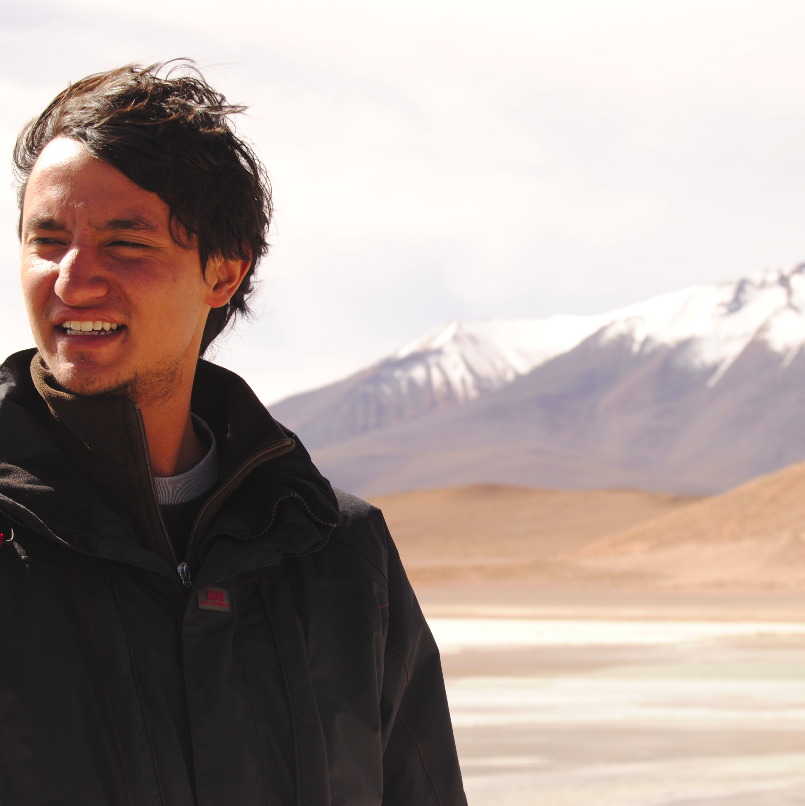
Sergio Daniel Hernandez Charpak is a PhD Computational Scientist, a Physicist and Computing Engineer researching in the interface between AI / medical imaging in healthcare, and also an enthousiast of travel, hiking, chess and piano.