Did you know that you can navigate the posts by swiping left and right?
A spinal cord neuroprosthesis for locomotor deficits due to Parkinson's disease
06 Nov 2023
. category:
Research
.
Comments
#neuroimaging
#epidural electrical stimulation
I am delighted to share our work published in Nature Medicine:
A spinal cord neuroprosthesis for locomotor deficits due to Parkinson’s disease
Nature Medicine, Vol. 29, No. 11, pp. 2854–2865 (November 2023)
Tomislav Milekovic, Eduardo Martin Moraud, Nicolo Macellari, Charlotte Moerman, Flavio Raschellà, Shiqi Sun, Matthew G. Perich, Camille Varescon, Robin Demesmaeker, Alice Bruel, Léa N. Bole-Feysot, Giuseppe Schiavone, Elvira Pirondini, Cheng YunLong, Li Hao, Andrea Galvez, Sergio Daniel Hernandez-Charpak, Gregory Dumont, Jimmy Ravier, Camille G. Le Goff-Mignardot, Jean-Baptiste Mignardot, Gaia Carparelli, Cathal Harte, Nicolas Hankov, Viviana Aureli, Anne Watrin, Hendrik Lambert, David Borton, Jean Laurens, Isabelle Vollenweider, Simon Borgognon, François Bourre, Michel Goillandeau, Wai Kin D. Ko, Laurent Petit, Qin Li, Rik Buschman, Nicholas Buse, Maria Yaroshinsky, Jean-Baptiste Ledoux, Fabio Becce, Mayté Castro Jimenez, Julien F. Bally, Timothy Denison, Dominique Guehl, Auke Ijspeert, Marco Capogrosso, Jordan W. Squair, Léonie Asboth, Philip A. Starr, Doris D. Wang, Stéphanie P. Lacour, Silvestro Micera, Chuan Qin, Jocelyne Bloch, Erwan Bezard, Grégoire Courtine
I led the guidance of the spinal cord EES neuroprosthesis implantation by developing a data pipeline that leverages different artificial neural networks (ANNs) for spinal tissue segmentation on MRI and CT scans. The guidance was based on personalized anatomical models built from high-resolution structural imaging — notably at a 1.5 Tesla MRI field strength. Beyond improving accuracy, this new pipeline significantly reduced the time and manual effort required to construct these personalized models, making the approach more accessible for clinical deployment. Thanks to the collective efforts of the team, the resulting stimulation led to notable improvements in the participant’s gait deficits caused by Parkinson’s disease.

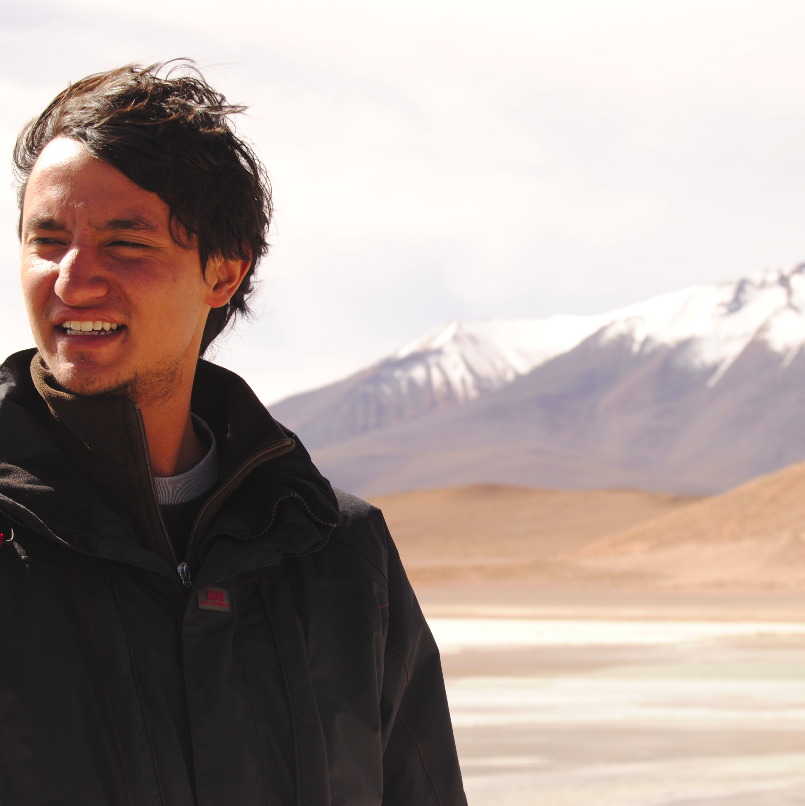
Sergio Daniel Hernandez Charpak is a PhD Computational Scientist, a Physicist and Computing Engineer researching in the interface between AI / medical imaging in healthcare, and also an enthousiast of travel, hiking, chess and piano.